
Ever wondered what having a narcissistic co-parent is like? Let me tell you—it’s a constant battle.
The Never-Ending Struggle: Unpaid Medical Bills
Let’s start with something simple: unpaid medical bills.
Per our divorce decree and parenting plan, all medical expenses are to be shared. Sly is responsible for 70% of them. The court document is clear—it says “any and all medical expenses,” not “some” or “only the ones you feel like paying.”
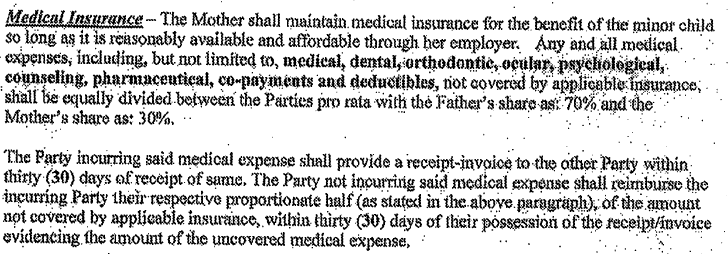
Yet here we are. Again.
For Chloe and me, this fight never ends. If you’ve been following my blog, you already know the pattern: it’s all about control. But this isn’t just about money—it’s about neglect. A parent who refuses to meet their child’s basic needs is showing a lack of care that runs much deeper than finances.
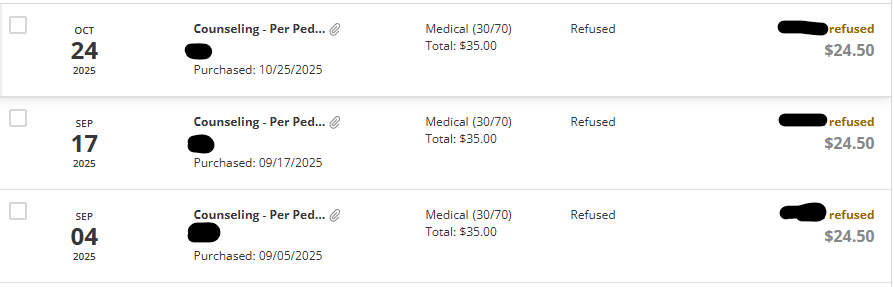
I’ve included screenshots of the last three medical expenses for Chloe. Each one has been rejected. He simply refuses to pay.
The Message He Ignored
Back on October 2nd, I sent Sly a message—one I can’t share in full—but I started it with this line:
“I’m writing to provide an update regarding Chloe’s current medical and educational care.”
In that message, I gently reminded him that Chloe has been diagnosed twice with anxiety and depression. She needs consistent counseling. Her teachers have reported that she’s struggling to focus in class—a common trauma response in children dealing with anxiety.
I also shared that her counselor recommended further evaluation by a psychologist and that I’d contacted her pediatrician for next steps. I reminded him, again, of his parental responsibilities.
His response? Completely dismissive.

So, I have a question… if you were in this situation as I am, what would your next steps be? What would you do?
So let’s revisit that divorce decree. Does it say he only has to pay for emergency medical care? No. Does it say he must approve every professional before Chloe gets help? No again. His excuses are pure deflection. And the bit about a nurse making the recommendation? False—the doctor evaluated Chloe while we were both in the room.
This is classic narcissistic behavior: deflect, deny, and control.
When Education Becomes a Casualty
Then there’s school. Chloe is struggling—more than she should be.
Our parenting schedule is simple: Sly has her Mondays and Tuesdays, I have her Wednesdays and Thursdays, and we alternate weekends. Each week, homework is due on Friday. Students have the entire week to complete spelling, vocabulary, and math assignments, plus study for tests on Thursday and Friday.
But for weeks now, every Wednesday when I pick her up, none of her homework has been done. That leaves us rushing to finish it all midweek. And since Chloe has an extracurricular activity on Thursdays—an activity she loves and absolutely deserves to keep—our time is tight.
Trying to cram a week’s worth of studying into one night has taken its toll. Her grades are slipping.
I’ve messaged Sly twice about this. He read the first message. No response. Silence speaks volumes.
Emotional Fallout: The School Struggles
As if that weren’t enough, we’re now dealing with trips to the principal’s office. Fourth grade drama is in full swing, and Chloe—being the emotional, empathetic child she is—often ends up in the middle of it.
She’s not starting fights or causing trouble. Her reactions—her tears, her panic, her fear of being in trouble—are trauma responses. When a teacher tries to talk to her, she breaks down completely.
This isn’t typical for a ten-year-old. It’s pain, showing up as emotion.
Parenting Through Trauma
Disciplining a child who’s been emotionally neglected is one of the hardest things a parent can do. You know they need structure and accountability—but they also need compassion, patience, and reassurance. It’s a delicate balance between protecting their heart and guiding their behavior.
And when you’re co-parenting with someone who refuses to see the damage they’re causing, every step forward feels like a fight uphill.
When You Need Help
If you’ve read this far and find yourself nodding along… please know you’re not alone. Co-parenting with a narcissist can make you feel helpless, crazy, and completely drained. I get it—because I’ve been there, and some days, I’m still there.
If you’re in a similar situation, the first thing I can tell you is this: document everything. Every message, every expense, every broken promise—keep it all. It feels exhausting, but one day, those details will matter.
Don’t be afraid to reach out for support.
- If you need legal help, check with your local family court self-help center or Legal Aid. There are people who will listen and can guide you.
- If you or your child are struggling emotionally, please reach out for counseling. A trauma-informed therapist can make such a difference.
- And if you ever just need someone to listen, you can call or text the 988 Suicide and Crisis Lifeline any time, day or night. You don’t have to be in crisis to reach out—they’re there to help.
- If you’re outside the U.S., visit findahelpline.com to find free, confidential support in your country.
Above all, remember this: you are not crazy. You are not overreacting. You are doing your absolute best in an incredibly difficult situation. And your child sees that—even if they can’t say it yet.
You are showing them what love, stability, and resilience really look like. ❤️
 Narcissistic Abuse Survival
Leave a comment