
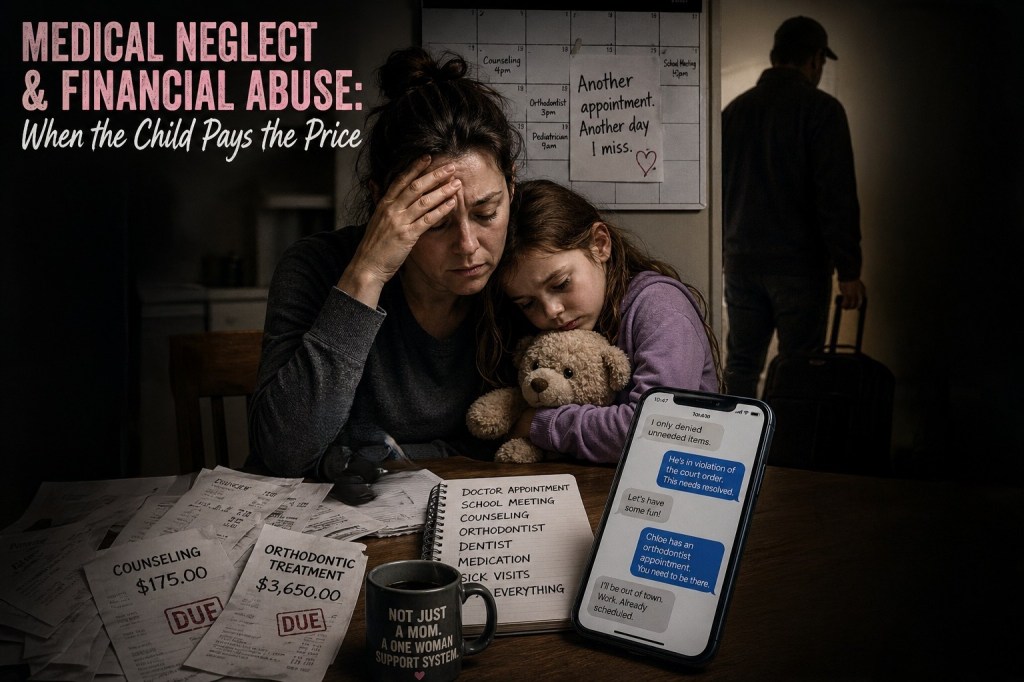
There are moments in this journey where I feel like I’m watching the same story play out over and over again… just with different details.
Different day. Same pattern.
And every single time, it leaves me sitting there thinking, how is this even real?
This past week was one of those times.
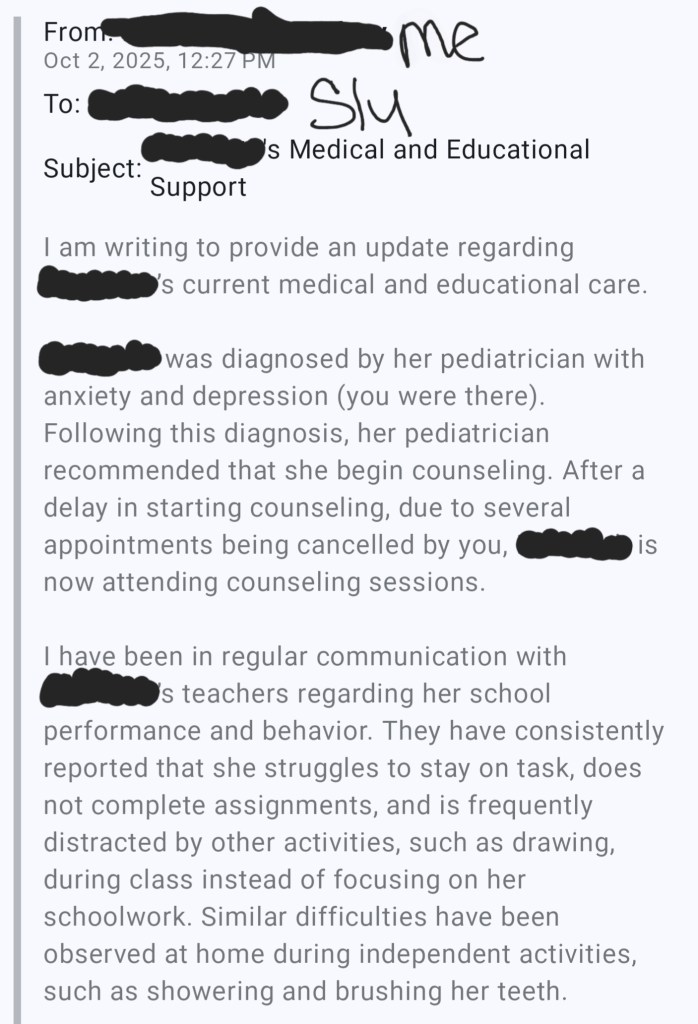
It started, like it always does, with something that should have been simple. Chloe needed care. Not optional care. Not something debatable. Real, documented, medically necessary care. She was diagnosed with anxiety and depression by her pediatrician, and counseling was recommended. Not casually suggested—recommended as part of a plan to help her.
I remember sitting there when that diagnosis was given. There’s a weight that comes with hearing those words about your child. A mix of heartbreak and urgency. You don’t hesitate. You don’t debate it. You move.
At least… that’s what a parent does.
But when you’re co-parenting with a narcissist, even something like that doesn’t stay simple for long.
Appointments didn’t just happen. They were delayed. Canceled. Rescheduled. And not because of unavoidable circumstances—because of him. And by the time counseling actually began, when Chloe was finally getting the help she needed, I already knew what was coming next.
The pushback.
The denial.
The rewriting of reality.
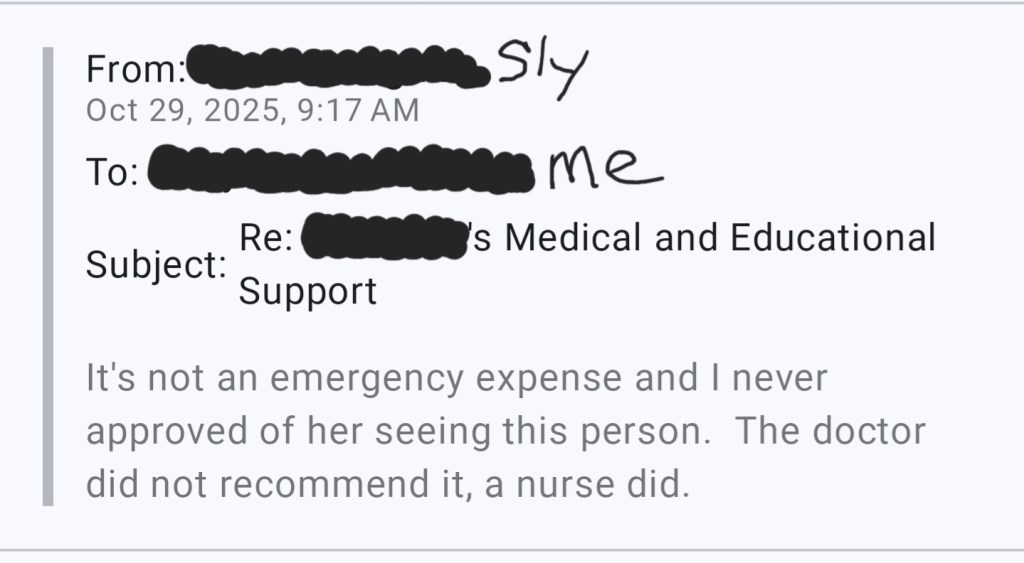
He said he had “only denied unneeded items.”
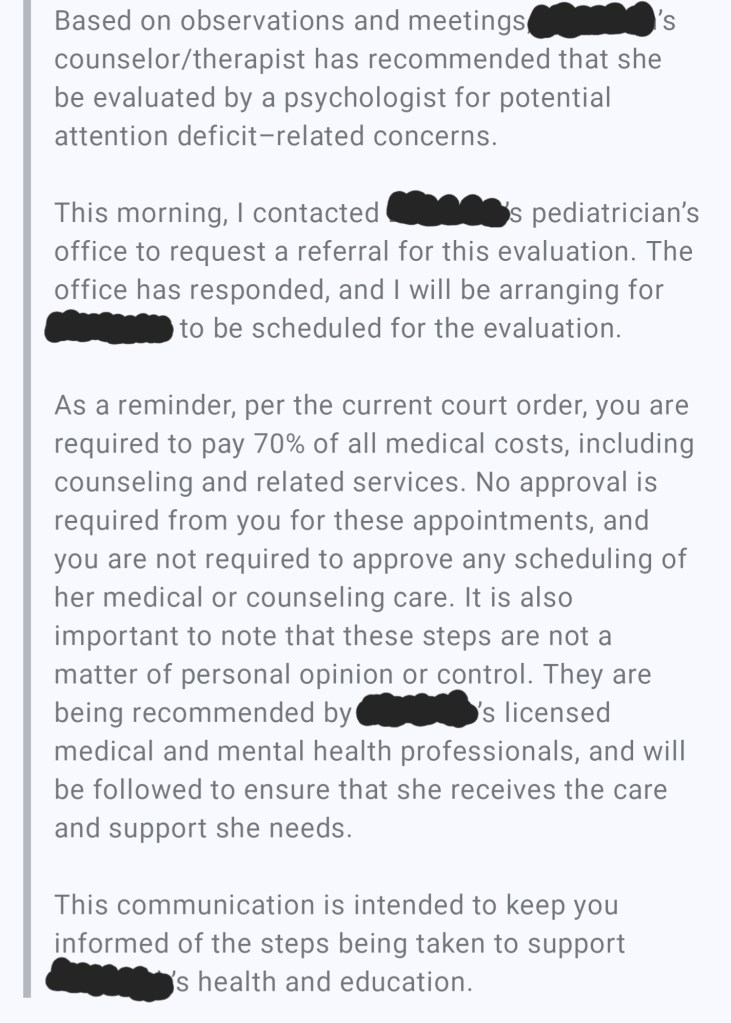
I sat there staring at that message longer than I probably should have, trying to make it make sense. Because what he was really saying—without saying it directly—is that he gets to decide what his child needs. Not the pediatrician. Not the counselor. Not the professionals trained to recognize and treat what she’s going through.
Him.
This is one of those things that’s so hard to explain unless you’ve lived it. On the outside, it sounds like a disagreement. Two parents with different opinions.
But it’s not.
It’s control.
It’s medical neglect dressed up as “I just don’t agree.”
And it puts you in this constant state of having to defend what should never need defending in the first place.
I eventually sent a message laying everything out clearly—he had denied multiple medical reimbursements, he was in violation of a court order, and if it wasn’t resolved, I would file for contempt. It wasn’t emotional. It wasn’t reactive. It was factual.
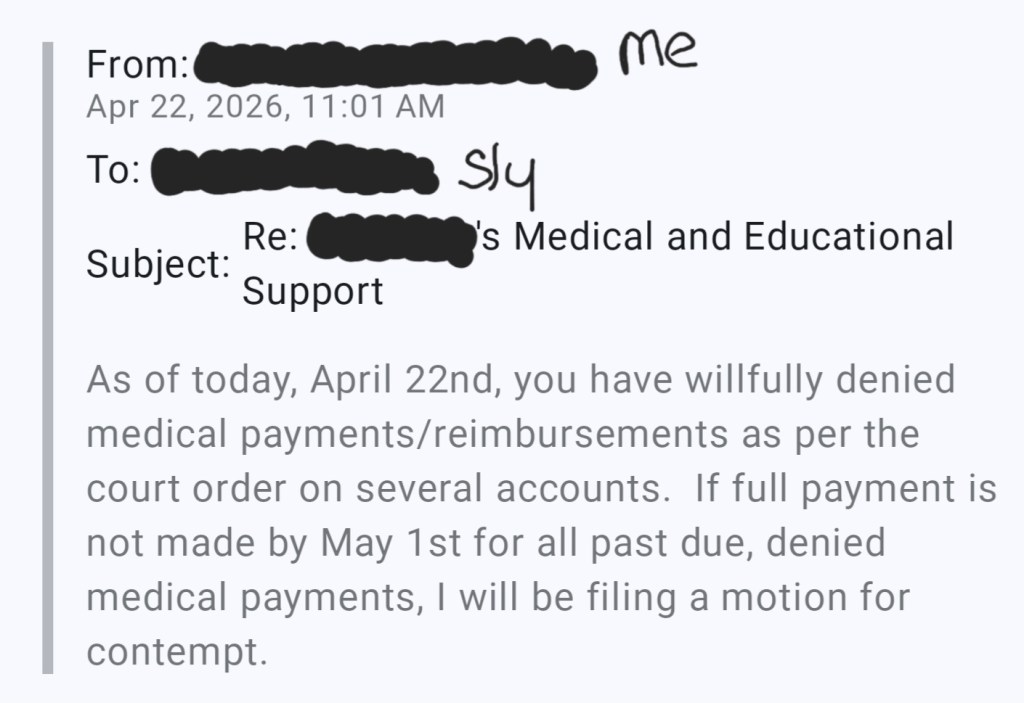
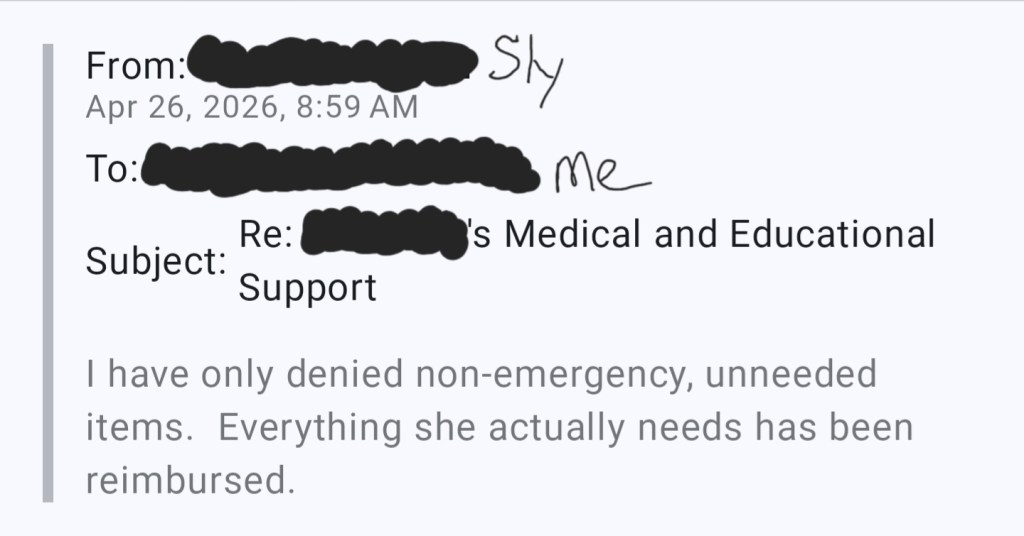
And his response?
“Let’s have some fun!”

I wish I could say that shocked me. But at this point, it didn’t.
It’s what they do.
They take something serious—something that affects their child, their responsibilities, real life—and they minimize it just enough to make you feel like you’re the one overreacting. Like maybe you’re the one taking it too seriously.
But you’re not.
You’re just the only one treating it like it matters.
And then, almost immediately, the conversation shifted. Not toward fixing anything. Not toward accountability. But away from it entirely.
Suddenly it wasn’t about the unpaid medical expenses anymore.
It became about reassessing child support. My income. My marriage.
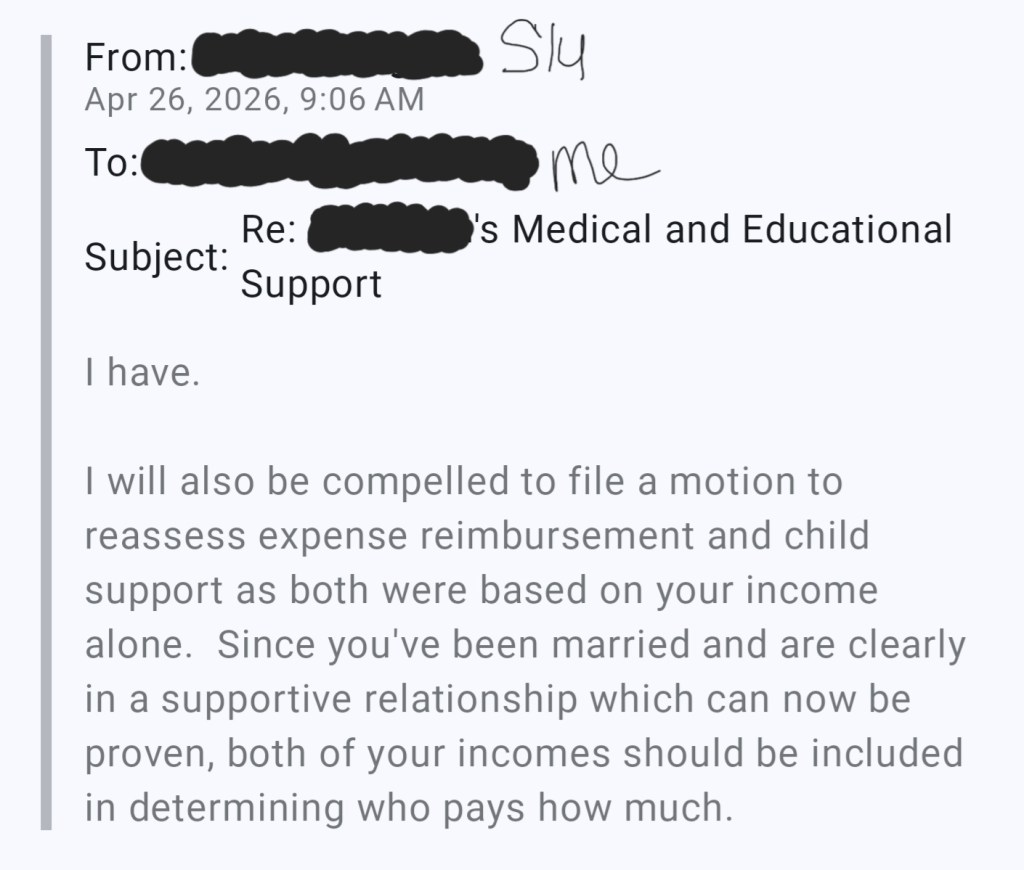
That shift happens so fast it almost gives you whiplash. One second you’re addressing something concrete—something documented—and the next, you’re being pulled into an entirely different argument you never started.
That’s deflection.
And it’s exhausting.
Because while all of this is happening—while messages are going back and forth, while reality is being twisted and redirected—Chloe is still a child who needs care.
She’s still going to school. Still struggling with focus. Still working through emotions that she doesn’t fully understand yet. Still needing consistency, support, and follow-through.
And life doesn’t pause for any of this.
It just keeps moving.
Which brings us to the next thing.
Orthodontics.
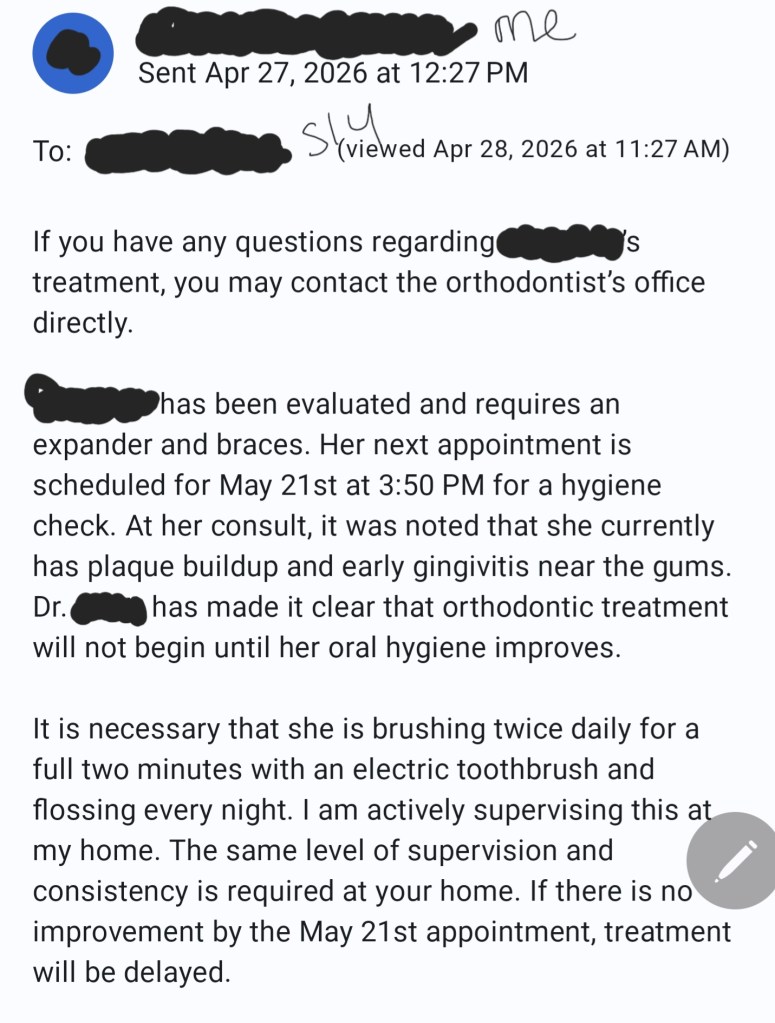
Chloe needs an expander and braces. Not for appearance—for her health. There are already signs of plaque buildup and early gingivitis. Delaying treatment could make things worse. So I did what I always do. I handled it.
I scheduled the appointment. Communicated the details. Explained the expectations. Broke down the costs. Made sure everything was clear, documented, and aligned with the court order.
And I asked him to be there.
Because this wasn’t just about showing up. It was about hearing the information directly, understanding the responsibility, and being present for something that affects his child.

His response?
He’d be out of town.
Work.
Already scheduled.
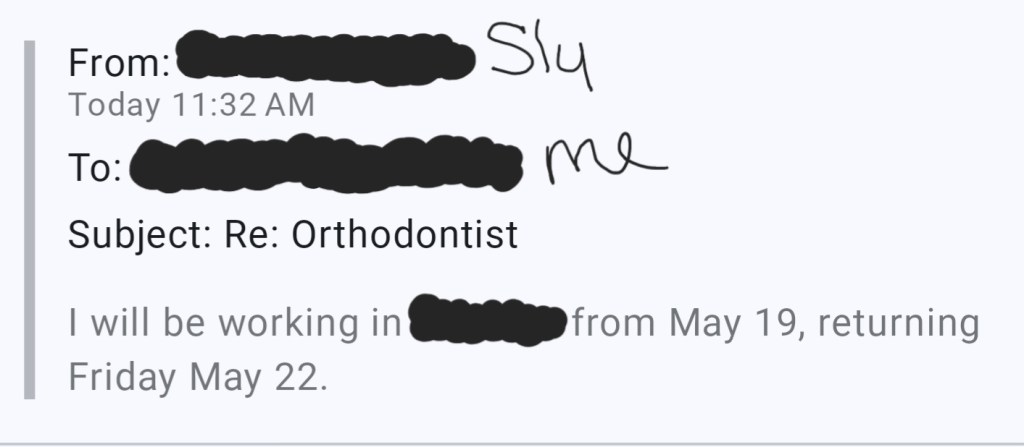
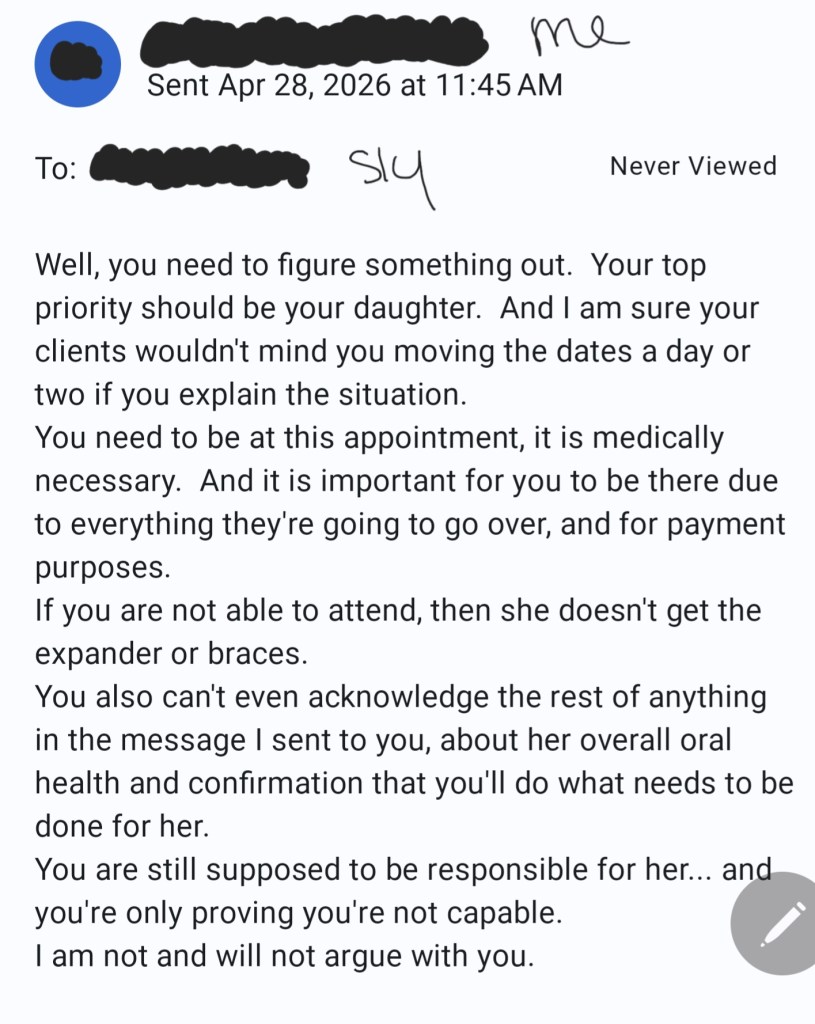
And just like that, we were right back where we started.
Because when I say, “She comes first,” I mean it in the most literal sense. Her needs come before convenience. Before scheduling preferences. Before everything.
But with a narcissist, that’s not how it works.
They will say all the right things about loving their child. They will claim they care. But when it comes down to action—real, consistent, inconvenient action—they choose themselves.
Every time.
And that’s the part people don’t see.
They don’t see who’s actually there.
Because I am.
Every appointment.
Every school function.
Every counseling session.
Every sick day.
Every moment where something isn’t optional and someone has to show up.
I’m the one making the appointments.
Sitting in the waiting rooms.
Talking to doctors.
Listening to counselors.
Following through on recommendations.
Holding her hand when she’s anxious.
Taking care of her when she’s sick or hurt.
And it’s not without cost.
I miss work.
I reschedule things that matter in my own life.
I give up time I was looking forward to.
I rearrange everything—over and over again.
Because she comes first.
That’s what being a parent is.
I don’t get to pick and choose which parts of parenting I participate in.
I just show up.
And he doesn’t.
Not for the things that matter. Not for the things that require consistency, effort, or inconvenience.
But here’s where it gets even more frustrating…
He does show up when there’s an audience.
When other people are watching.
When there’s an image to maintain.
When it looks like involvement.
And that’s what makes this so hard for people on the outside to understand.
Because they don’t see what’s missing.
They don’t see the appointments he didn’t attend.
The responsibilities he didn’t follow through on.
The decisions he avoided.
The care he left to someone else.
They see the version he wants them to see.
And I’m left carrying the version that’s real.
The quiet, consistent, behind-the-scenes reality of raising a child who needs stability… without a co-parent who provides it.
And I’ll keep doing it.
Because she deserves that.
But let’s not pretend this is shared parenting.
It’s not.
It’s one parent showing up… and one parent showing up only when it benefits them.
If you’re reading this and you’ve lived something similar, you already know how isolating it can feel. How confusing it is to try to explain something that sounds so simple on the surface but feels so heavy in reality.
You’re not imagining it.
You’re not overreacting.
This is what medical neglect and financial abuse can look like in real time—quiet, disguised, and consistent.
And more often than not, the one who pays the price… is the child.
So I document.
Because patterns don’t lie.
Even when people do.

 Narcissistic Abuse Survival
Leave a comment